The Vibration Killer
The Vibration Killer: Why Your Legs Fail Before You Do
There is a specific kind of agony that every endurance racer knows: the moment your legs stop responding, not because you’re out of breath, but because your stabilizer muscles have simply quit. You’re pushing, your heart rate is in the aerobic zone, your lats are firing, but your ankles and lower legs feel like they’re made of lead. Most athletes accept this as the 'cost of doing business' in long-distance racing. They pop another electrolyte tab and tell themselves they need to train harder.
But what if I told you that your legs aren't failing because of your fitness? What if the culprit wasn't your training, but your board? You are suffering from Vibration Fatigue, and it is the single most overlooked speed-killer in our sport.
The "Tuning Fork" Effect
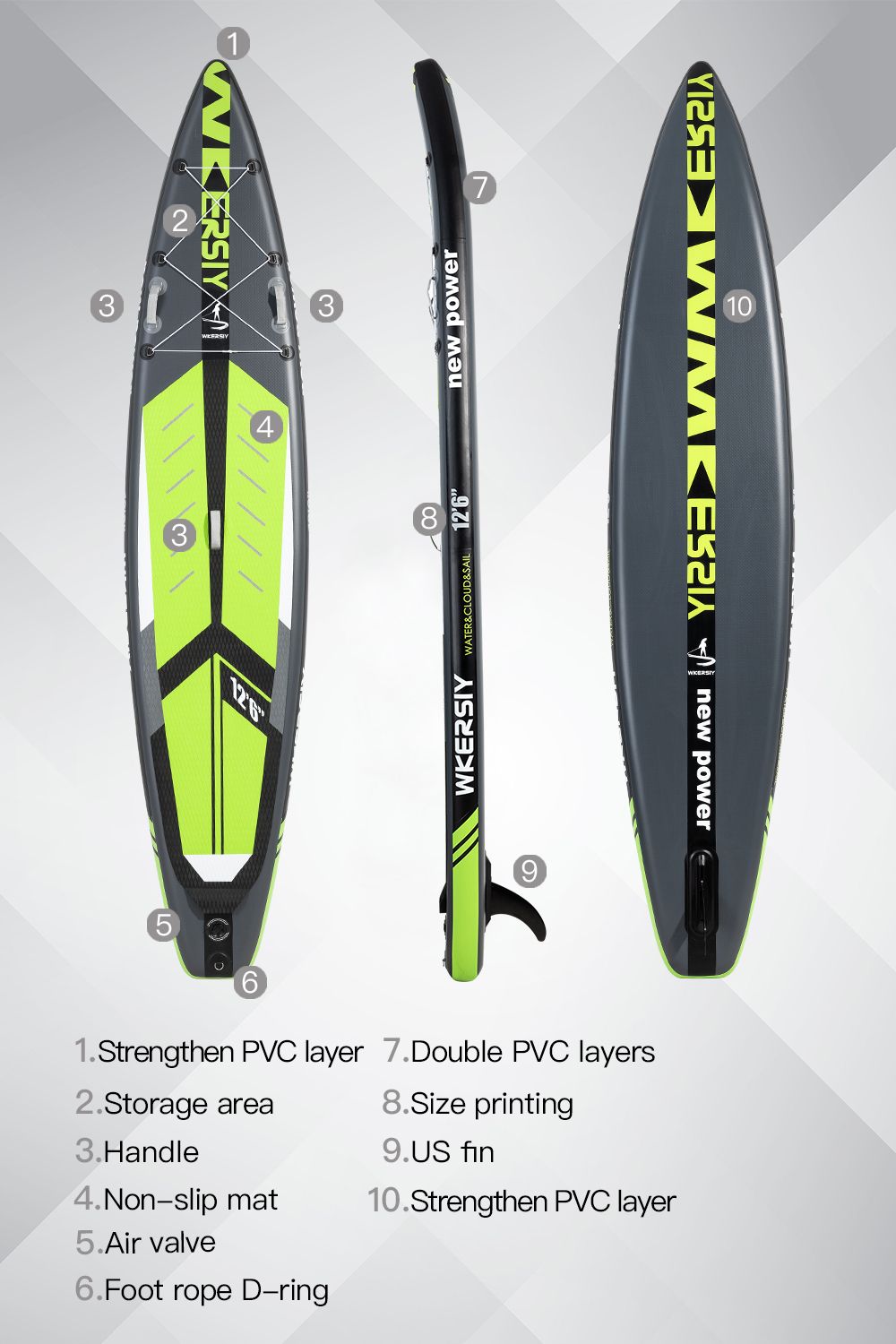
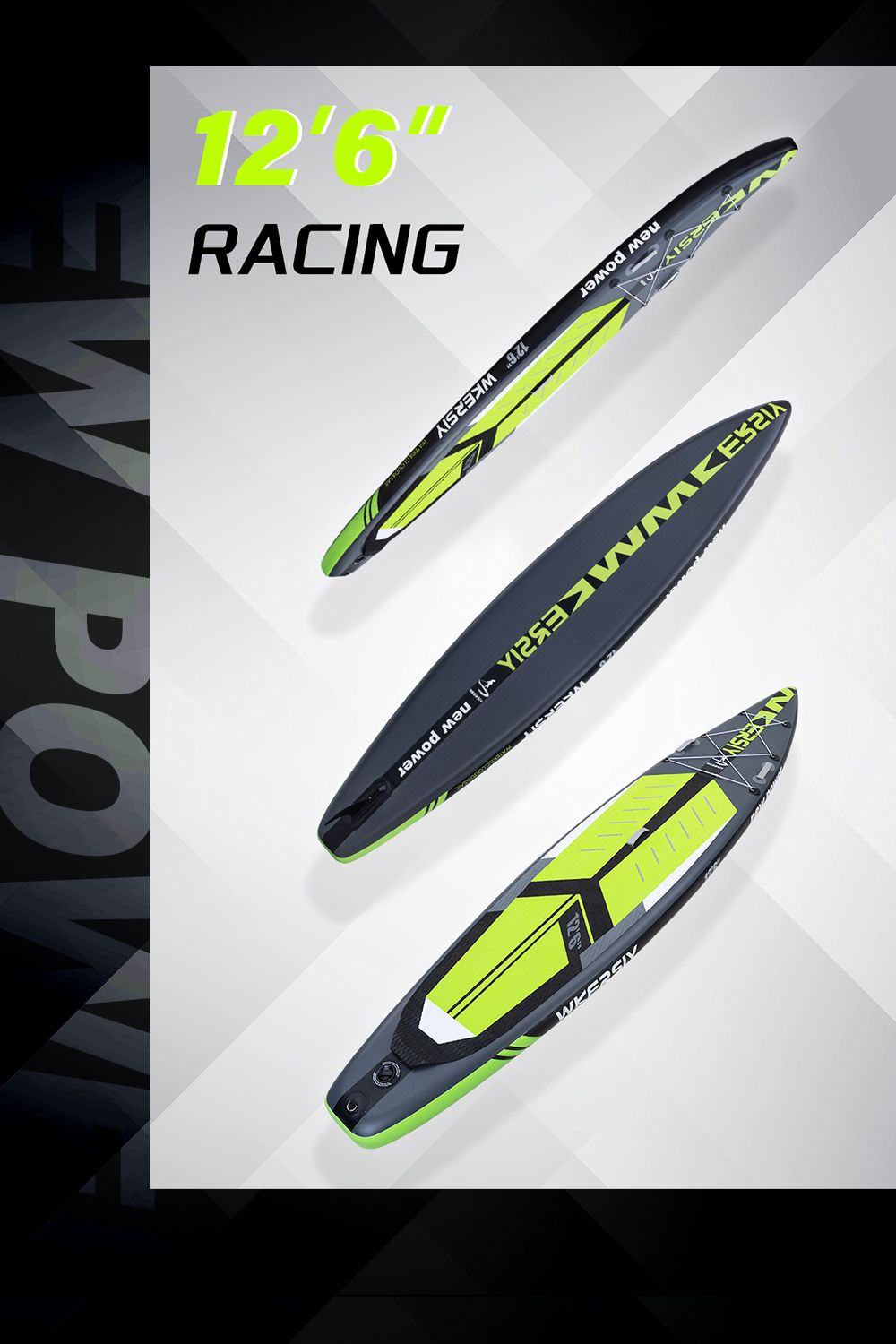
Think about what a paddleboard actually does. It is a high-tensile carbon membrane moving across a chaotic, textured, liquid surface. Every micro-ripple, every gust of wind-chop, and every bit of surface turbulence sends a high-frequency vibration up through your paddle and through the deck of your board. If your board is constructed of 'isotropic' carbon—the industry standard—the stiffness is uniform in every direction. This makes your board act like a tuning fork.
Your nervous system is constantly receiving these thousands of micro-vibrations per minute. To keep you upright, your stabilizer muscles—those tiny fibers in your ankles, knees, and hips—are firing in a constant state of spasm to counteract that noise. By mile eight of a race, your muscles aren't failing because you’ve exhausted your energy stores; they’re failing because they’ve been in a state of high-frequency seizure for two hours.
The RockerWave Anisotropic Vectoring™ Solution
We looked at this problem through the lens of Formula 1 chassis engineering. You need a board that is longitudinally stiff to handle the torque of your stroke, but you need a board that is torsionally 'smart' enough to filter out the noise. That is where Anisotropic Vectoring™ comes in.
Instead of a uniform carbon weave, we integrate carbon fibers at calculated 45-degree biases along the rails and the standing area. This creates a 'torsional cage.' It allows the board to maintain absolute forward-driving rigidity, but it gives the hull the ability to dampen the high-frequency chatter of the water surface. It acts as a mechanical shock absorber. When you hit a patch of chop on a RockerWave, the vibration is absorbed by the fiber architecture rather than being transmitted into your nervous system.
Preservation: The Ultimate Performance Edge
Performance in endurance racing is simple: it is the art of energy preservation. If I arrive at the final sprint with fresher legs than my competitor because my board didn't force me to fight the water's vibration, I win. It’s that simple. By filtering out the noise, RockerWave boards allow you to save your 'neurological currency' for when you really need it—the finish line.
"The fastest board isn't just the one that slices the water; it's the one that protects the athlete. If your board beats you up, it has already lost the race."
The Philosophy of the RockerWave Athlete
We don't build boards for people who want to settle for 'good enough.' We build for the paddler who understands that every detail matters. From the Kinetic Step-Tail™ that kills the vacuum, to the Ergo-Lock™ deck that aligns your skeleton, and the Anisotropic Vectoring™ that saves your muscles—every single element of our design philosophy is dedicated to one goal: uncompromising efficiency.
If you have been blaming your body for your lack of endurance, it’s time to stop. It’s time to equip yourself with the technology that works with your biology, not against it.
Are you ready to experience the difference that true engineering makes? Check out our complete lineup of Master Series hulls and see which technology package is right for your racing style. Visit RockerWave.com and upgrade your race-day engine.