The Stability Fallacy
The Stability Fallacy: Why Your Wide SUP is Actually Hurting Your Progression
There is a dangerous myth in the paddling community: "Stay on a wide board until you've 'earned' the right to ride a narrow one." It’s advice that sounds safe, but in reality, it’s keeping thousands of paddlers anchored to mediocrity. If you’re still riding a 26-inch or 28-inch board because you’re afraid of the "twitchiness" of a professional hull, you aren't being cautious—you’re being held hostage by a design flaw.
The Myth of "Width Equals Stability"
The industry loves to sell wide boards because they are easy to manufacture and sell to beginners. They provide a false sense of security. But here is the physics: a wide, flat hull is only stable in perfectly flat water. As soon as you hit chop or cross-currents, that wide deck acts like a leaf on the surface—it’s forced to follow the chaotic movement of every single wave. You aren't 'stable' on a wide board; you’re just a passenger to the water's whims.
At RockerWave, we don't believe in using surface area to compensate for poor design. Stability shouldn't be about the width of the board; it should be about Metacentric Volume Clustering™.
The Science of Metacentric Volume Clustering™
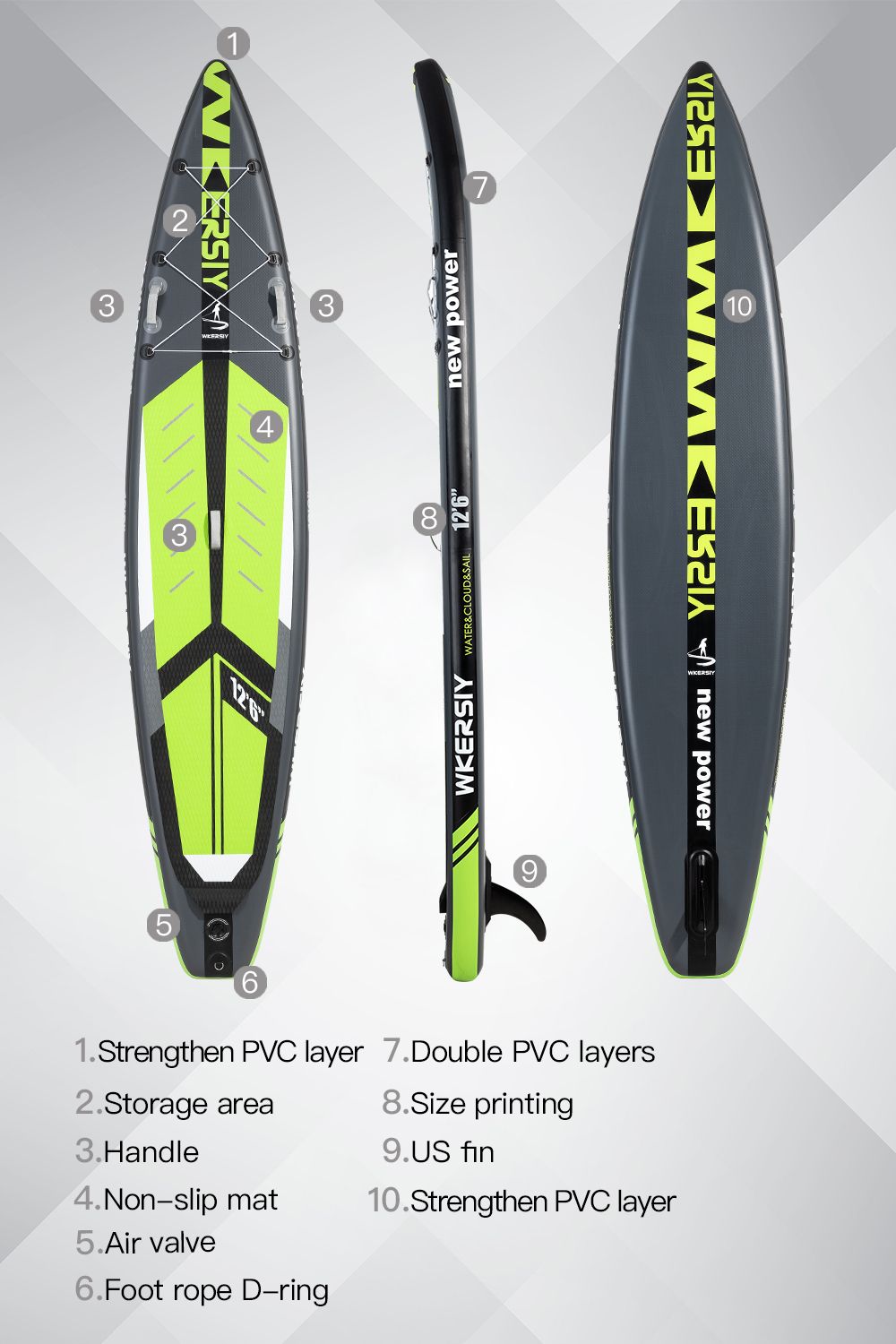
Our Master Series 21-inch hulls are engineered using a revolutionary volume distribution. We concentrate the buoyancy in the rails—the edges of the board—rather than the center. This creates a 'safety net' of volume that only engages when the board begins to lean. When you are standing upright, the board feels fast, razor-thin, and incredibly responsive. But the moment you encounter a lateral force, that rail-volume kicks in, providing a firm, reactive counter-balance that is significantly more stable than the 'bobbing' feeling of a wide, flat cruiser.
Think of it like a tightrope walker using a long, flexible pole. The pole doesn't need to be wide; it just needs to be designed to resist the lean. That is exactly what our rail-geometry does. It transforms the board from a passive platform into an active stabilizer.
Are You Ready for the Next Level? (Self-Assessment Tool)
Stop guessing what size board you need. If you recognize yourself in these categories, it’s time to move up:
| Current Profile | The Problem | RockerWave Solution |
|---|---|---|
| The "Wide-Board Loyalist" | Struggling to find rhythm in chop; board feels 'clunky.' | Master Series 21": Immediate improvement in glide efficiency. |
| The "Fitness Paddler" | Hitting a speed plateau; board feels like 'dead weight.' | Master Series 20": Radical reduction in drag and effort. |
| The "Aspiring Racer" | Intimidated by narrow hulls; fears constant falling. | Master Series 21" (High-Rail): Stability through geometry, not width. |
The Truth About Your Potential
The only thing keeping you on that wide, slow board is an outdated belief system. Every minute you spend fighting the surface area of a wide board is a minute you aren't learning how to truly master the ocean. True balance comes from your core and your connection to the water, not the extra five inches of plastic under your feet.
"Don't confuse 'ease of standing' with 'performance.' True performance starts where the comfort zone ends."
Take the Leap
We’ve engineered our 21-inch Master Series to be so stable that even intermediate riders find they are more confident in the ocean on our pro hulls than on their 'beginner' boards. Don't let the numbers scare you away from your best performance yet.
Are you ready to stop making excuses for your equipment? Compare your current dimensions to our optimized performance hulls and see which Master Series board will unlock your next speed tier. Visit RockerWave.com to view our sizing guide.