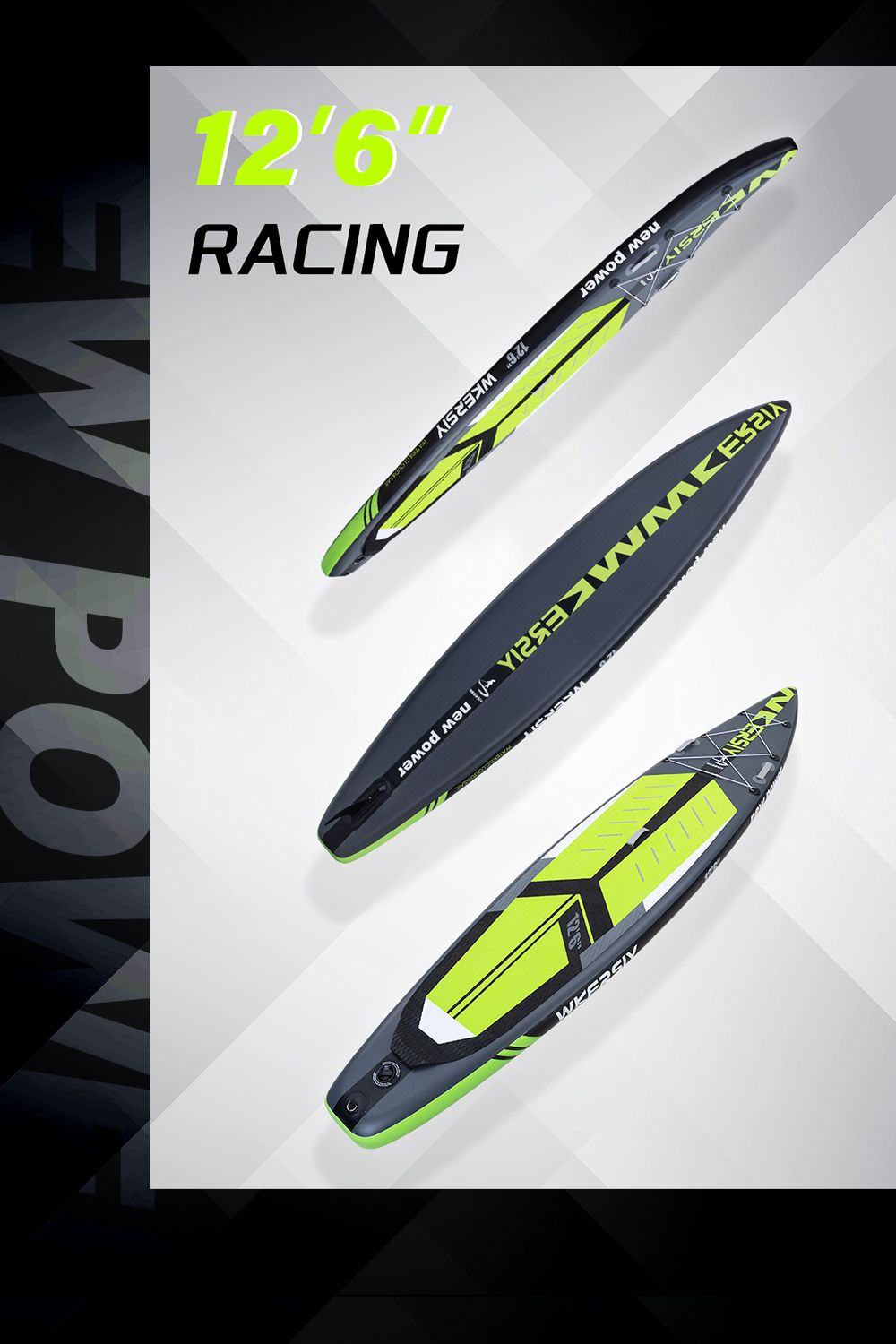
The Professional’s Lifecycle: A Maintenance and Optimization Guide for Master Series Hulls
In the professional world, we have a saying: "You are only as fast as your preparation." Yet, strangely, the most common oversight in competitive paddling is the lifecycle management of the equipment itself. We treat our boards like seasonal clothing—buy it, thrash it, discard it, replace it. But for the elite athlete, a racing SUP is a precision-engineered asset, comparable to a racing bicycle or a competition sailboat. If you want to remain at the top of your game, you must move beyond "usage" and into the realm of "asset management." This manifesto is your roadmap to maximizing the performance life of your RockerWave Master Series hull.
Section 1: The Micro-Damage Protocol
A racing hull is subject to thousands of micro-stressors: UV degradation, thermal expansion, micro-abrasions from sand, and structural fatigue from transportation. While our autoclave-cured hulls are exponentially more durable than traditional vacuum-bagged boards, they are not immune to the laws of physics. The "Micro-Damage Protocol" is a routine inspection discipline. After every major race or heavy training block, inspect the rails and the standing area for microscopic stress lines in the gel coat or finish. Using a simple magnifying glass to catch these issues early prevents them from becoming structural ingress points for water. A stitch in time saves the hull.
Section 2: Performance Tuning: The "Tailoring" Process
Your board is not a static object; it is an adjustable platform. Every athlete has a unique weight distribution and stroke style. You can "tune" the Master Series hull to your specific racing conditions. This involves balancing your fin geometry with your rail trim. If you are racing in heavy side-wind, adjust your fin position forward to increase the board’s willingness to pivot. If you are on a long-distance flat-water grind, shift your fin position back to lock in tracking stability. Understanding these subtle adjustments transforms your board from a generic racing tool into a custom-tailored extension of your biomechanics.
Section 3: Structural Preservation
The greatest enemy of a high-performance carbon hull is thermal shock. Leaving a carbon board in direct sunlight on a rack is the fastest way to compromise the resin-to-fiber bond. Always use a reflective thermal cover. Think of it as protecting your engine. Furthermore, when transporting your board, ensure that your roof rack contact points are padded and that your straps are not over-tightened. We have seen more hulls damaged by "strap crush" than by any racing condition. Treat your board with the professional respect it demands.
Section 4: The Seasonal Refresh
Every professional board benefits from a "seasonal refresh." This doesn't mean painting it—it means restoring the surface integrity. Over time, the hydrophobic molecular bonding on the hull will naturally degrade. We recommend a seasonal application of a professional-grade hydrophobic sealant. This keeps the drag coefficient as low as it was on day one. Additionally, check your fin box integrity and ensure there is no salt-crystal build-up in the mechanical interfaces. These small maintenance rituals are the difference between a board that feels "fresh" after two years and one that feels "tired."
Conclusion: The Professional’s Mindset
The Master Series is built to be a lifelong asset, but your performance remains your responsibility. When you take the time to maintain, tune, and optimize your equipment, you are engaging in a deeper level of competition. You are not just a racer; you are a technician of your own craft. That is the mindset that separates the podium finishers from the rest of the pack. You don't just win with your muscles; you win with your preparation, your knowledge, and your dedication to the craft of the sport.
Optimize your performance. Download our full maintenance and tuning manual, and join the RockerWave professional network at RockerWave.com.