Ocean Dynamics: Mastering Downwind Performance through Kinetic Rail Geometry
Downwind racing is the "Formula 1" of the paddleboarding world. It is the ultimate test of a paddler's ability to read the ocean's energy and synchronize their rhythm with the moving chaos of open water. On a flat-water course, the board is a static tool; in the open ocean, it becomes a vessel that must actively participate in the dynamics of the swell. The difference between a master downwinder and a struggling novice is not just fitness—it is the intuitive understanding of how a hull interacts with moving water. At RockerWave, we have spent years engineering our rails to turn this understanding into a competitive advantage.
Section 1: The Physics of "The Runner"
Downwind paddling is all about energy conservation and extraction. You are essentially trying to stay on the front face of a wave—the "runner." If your board is too buoyant, it will pop over the crest; if it is too "sticky," it will bury its nose. The key to the runner is the interaction between the board's rocker line and the wave's speed. Most racing boards are optimized for flat water, leading to a "nose-dive" tendency in open-ocean chop. This is where most downwind races are lost: the moment of impact when the nose hits the trough.
Section 2: Kinetic Rail Geometry™
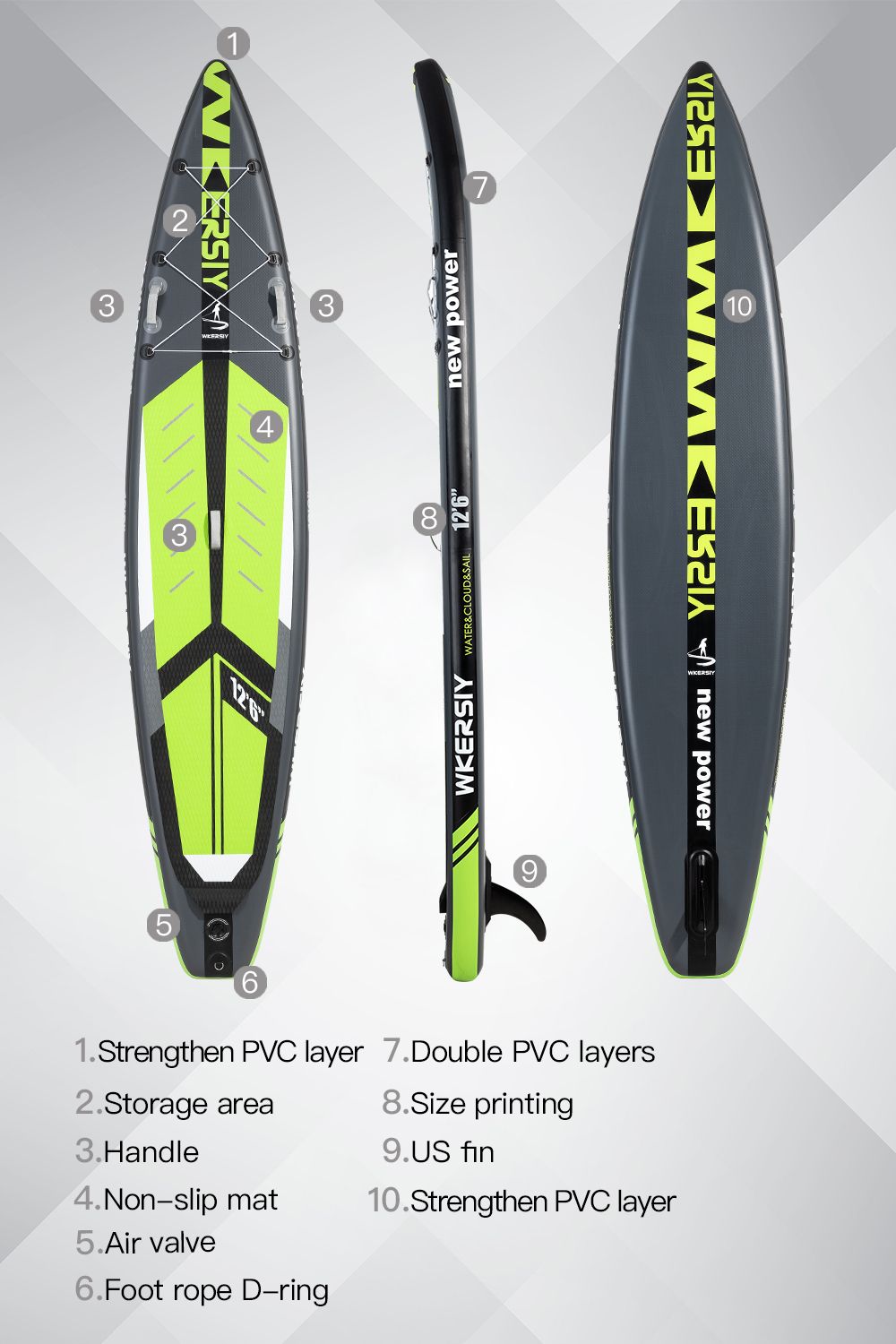
We developed Kinetic Rail Geometry™ to solve the "buried nose" problem. Unlike traditional parallel-rail designs, our rails feature a dynamic, progressive bevel that changes shape from the bow to the stern. Near the nose, the rails are aggressively rounded to shed water and promote a "rising" effect when the board meets a swell. As you move toward the standing area, the rails sharpen into a "release edge" to maintain tracking stability, and at the stern, they widen to provide a platform for active trim adjustments.
This means that when you are on a runner, the board reacts to your weight shifts with surgical precision. If you need the nose to rise, a micro-shift of your heel engages the bow bevel. If you need to lock in a hard turn, the rail edge bites. The board doesn't just ride the wave; it communicates with it.
Section 3: Harnessing Ocean Potential
The ocean is a massive, shifting battery of potential energy. Your board’s job is to act as the conduit. Traditional boards dissipate this energy through drag. Our Kinetic Rail Geometry™ captures it. By minimizing the "stiction" of the rail-to-water contact point, the RockerWave Master Series allows you to maintain speed even when you aren't actively paddling. You learn to "glide through the dead zones" between swells, preserving your metabolic energy for the sections where the wind and swell are aligned.
Section 4: The Strategy of Open Water
Downwind racing is as much about psychological strategy as physical output. You have to be willing to trust the board’s geometry. Many paddlers over-correct, causing the board to oscillate and lose speed. With our rails, the board tracks true by design, allowing you to focus your vision further down the swell. When you stop micro-managing the board's stability, you start observing the ocean’s patterns. You become a pilot, not just a passenger.
Catch more runners. Experience the open-ocean superiority of the Master Series at RockerWave.com.